
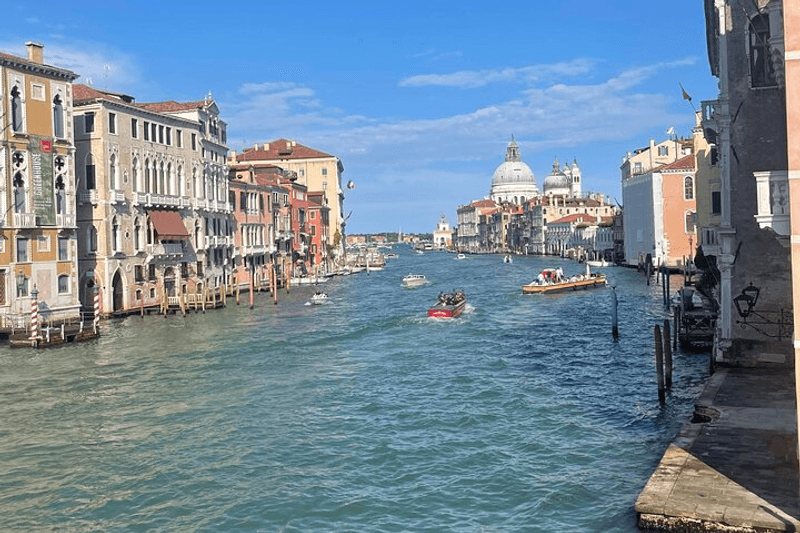
Most visitors follow the same route: station, Rialto, St Mark’s, and back. Between those three points the lanes are packed. But turn left at the right moment and you find a silent city, where all you hear are footsteps and water.
Here are three sestieri where Venetians still live, and why to explore them with a guide who grew up there.
1. Cannaregio, the evening quays
In the north of the city, Fondamenta della Misericordia and Fondamenta degli Ormesini are young Venetians’ favourite terraces. Aperitivo is taken facing the canal, feet almost in the water.
Cannaregio is also home to the Ghetto, created in 1516: the first in the world to bear that name. Its buildings, taller than anywhere else in Venice, tell a story few visitors take the time to hear.
2. Castello, everyday Venice
Past the Arsenale, where the Republic once built its galleys, Via Garibaldi is the only truly wide street in Venice. Laundry at the windows, vegetable sellers on boats, children on bikes: the liveliest and least touristy part of town.
“In Castello people say good morning. At St Mark’s they sell you a mask.”
Push on to San Pietro di Castello, Venice’s former cathedral, on its small tree-lined island. You will probably have it to yourself.
3. Dorsoduro, art and cicchetti
Between the Accademia and the Salute, Dorsoduro is the district of students and galleries. Campo Santa Margherita comes alive in the late afternoon, and along the Zattere you walk facing the Giudecca in the evening light.
Three things to know to dine like a Venetian:
- The bacaro — a wine bar where you eat standing at the counter
- Cicchetti — small bites, from baccalà mantecato on polenta to sardines in saor
- The ombra — a small glass of wine, named after the shade of the campanile where it used to be drunk
Do not miss the squero di San Trovaso, one of the last yards where gondolas are still built and repaired.